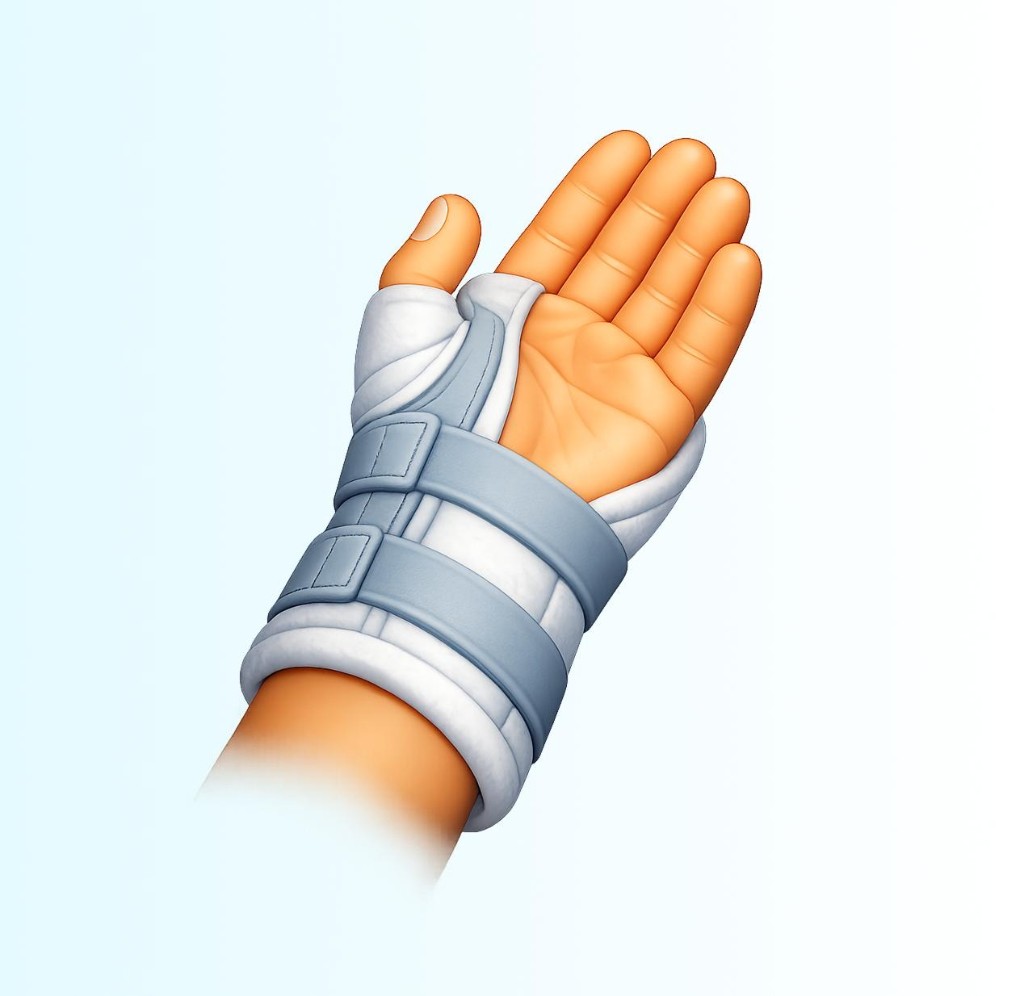
Crush injury
Crush injuries often recover unevenly — motion, pain, nail sensitivity, numbness, and strength may all improve at different speeds.
Assistive gear (education)
Curated recovery marketplace ideas — not medical advice. Confirm fit with your clinician before buying or changing splints/tools.
Common problems
- Swelling
- Stiffness
- Nerve symptoms
- Pain sensitivity
- Nail or fingertip issues
- Weakness
Main goals
- Protect healing tissue
- Control swelling
- Restore motion
- Desensitize
- Rebuild function
Avoid / get clearance for
- Forcing motion before tissue tolerates it
- Heavy gripping early
Phase ladder for this condition
Stay in a phase until symptoms are calm and stable. Then progress one variable at a time. Open the universal phase guide for full context on each phase.
- 0
Protection & red flags
Avoid making the injury worse.
Elevation many times daily; cleared motion 3–6 micro-sessions/day; no heavy grip; no aggressive stretching.
- 1
Early motion & swelling control
Keep tissue moving without stressing healing structures.
5–10 min/session × 3–5/day; low intensity; smooth movement; no forcing end range.
- 2
Active range of motion & tendon gliding
Restore normal joint motion and tendon sliding.
10–15 min × 3/day; hold gentle end-ranges 3–10s; track fist closure & finger straightening.
- 3
Light strengthening
Rebuild grip, pinch, wrist, and endurance without irritating tissue.
1–3 sets × 8–15 reps; 2–4 days/week; increase only when symptoms stay calm 24h.
- 4
Dexterity & coordination
Make the hand useful in real life again.
5–15 min daily; short and precise; stop before fatigue causes sloppy movement.
Recommended exercises
Reel Mode
Swipe vertically through short looping clips in this regimen's order — fast to browse, still education only.
Tap any to start a guided session. Stop rules and contraindications are listed on each exercise page.
Traffic-light progression rules
Use after every session — especially the next morning. The hand's response to today is the input for tomorrow's dose.
Signals
- Pain stays 0–3 / 10
- Swelling does not increase
- Motion improves or stays stable
- Symptoms settle within a few hours
- Next morning is not worse
Actions
- Add 1–2 reps
- Add 1 set
- Add 1 daily session
- Move to slightly firmer putty
- Add a more complex task
- Extend typing or work intervals
Signals
- Pain reaches 4–5 / 10
- Hand feels more swollen afterward
- Tingling increases but settles quickly
- Motion is worse later that day
Actions
- Reduce resistance
- Reduce reps
- Shorten the session
- Add a rest day
- Return to mobility-only routine
Signals
- Pain is sharp or escalating
- Numbness worsens and persists
- Fingers become cold, blue, pale, or very swollen
- Wound opens or drains
- Sudden pop or loss of motion
- Finger locks repeatedly and painfully
- New deformity appears
Actions
- Stop the routine
- Contact your clinician or seek urgent care
- Document what changed and when
Track these every few days
- Is swelling reducing?
- Is sensation changing?
- Any color or temperature changes?