Common hand surgeries

What the procedure is, why it's done, what recovery typically looks like — and the symptoms that mean stop and call your team.

Optional: show clinical labels where we cite them.
Surgeries

8 procedures explained

Carpal tunnel release

A short procedure that cuts the tight ligament across the wrist to take pressure off the median nerve.

Why it's done

  • Persistent numbness or tingling in the thumb, index, and middle fingers
  • Symptoms that wake you at night and don't respond to splinting
  • Weakness or thumb muscle wasting

Red flags

  • Increasing redness, drainage, or fever
  • New or spreading numbness
  • Severe pain not controlled by rest and elevation

Recovery phases

  1. Days 0–7Protect the wound; gentle finger motion.
    Keep the hand elevated. Move fingers often. Keep the bandage dry.
  2. Weeks 2–4Restore wrist motion and light grip.
    Begin gentle wrist range of motion as your surgeon allows.
  3. Weeks 4–8Build pinch and grip endurance.
    Add light putty work and return to most daily tasks.
  4. Months 2–6Return to demanding tasks; symptoms continue to settle.
    Heavier lifting and sustained gripping return last.
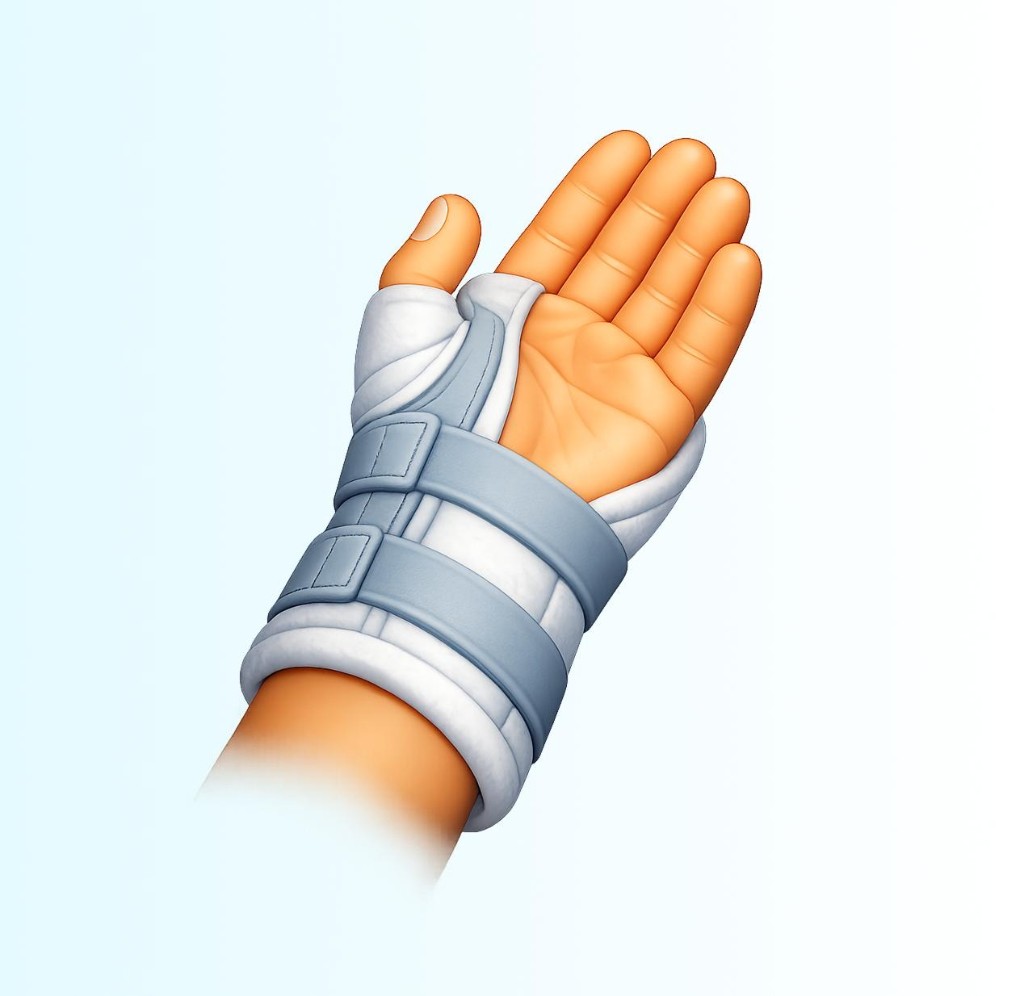
Expected splints: Wrist cock-up splint
Full recovery breakdown

Trigger finger release

A small procedure that opens the tight pulley at the base of a finger so the tendon can glide freely again.

Why it's done

  • Painful catching or locking of a finger
  • Symptoms that don't respond to a steroid injection or splinting

Red flags

  • Spreading redness
  • Drainage or fever
  • New numbness in the finger

Recovery phases

  1. Days 0–7Wound care; full finger motion.
    Move the finger gently and often to avoid stiffness.
  2. Weeks 1–3Resume most daily tasks.
    Avoid heavy gripping while the wound matures.
  3. Weeks 3–6Strength and full grip return.
    Light putty and grip drills as cleared.
Expected splints: Buddy straps
Full recovery breakdown

Flexor tendon repair

Surgical repair of a cut or torn finger flexor tendon. Recovery is highly protocol-driven.

Why it's done

  • Cut or ruptured flexor tendon, often after a laceration

Red flags

  • A sudden 'pop' with loss of finger bending — possible re-rupture
  • Increasing pain, redness, drainage, or fever
  • Worsening numbness

Recovery phases

  1. Weeks 0–4Protect the repair; controlled motion in a dorsal blocking splint.
    Strict splint wear; perform exactly the motion your therapist prescribes.
  2. Weeks 4–8Active motion without resistance.
    Splint adjustments; more motion, no lifting.
  3. Weeks 8–12Begin light strengthening as cleared.
    Light putty; progress only with therapist sign-off.
Expected splints: Mallet finger splint
Full recovery breakdown

De Quervain's release

Opens the tight tunnel over two thumb tendons at the wrist so they can glide without irritation.

Why it's done

  • Persistent thumb-side wrist pain not relieved by splinting or injections

Red flags

  • Spreading redness
  • Drainage
  • Fever
  • Severe new pain

Recovery phases

  1. Days 0–7Wound care; gentle thumb motion.
    Use a thumb spica only as your surgeon directs.
  2. Weeks 1–4Restore thumb and wrist motion.
    Light functional use returns.
  3. Weeks 4–8Strength and full activity.
    Pinch and grip strengthening as cleared.
Expected splints: Thumb spica splint
Full recovery breakdown

Hand fracture fixation

Realigning broken bones and holding them with pins, wires, or a plate so they heal in the right position.

Why it's done

  • Displaced or unstable fractures
  • Fractures involving a joint surface

Red flags

  • Increasing swelling, color change, or numbness
  • Hardware site pain that worsens
  • Fever or drainage

Recovery phases

  1. Weeks 0–6Bone healing; protect the construct.
    Splint or cast wear as directed; move uninvolved joints.
  2. Weeks 6–12Restore motion.
    Begin gentle motion as your surgeon clears it.
  3. Months 3–6Strength and return to full activity.
    Strength work progresses gradually.
Expected splints: Wrist cock-up splint
Full recovery breakdown

Thumb CMC arthroplasty

Removes the worn-out trapezium bone at the base of the thumb and uses nearby tissue to stabilize the thumb. Used for advanced thumb-base arthritis when conservative care fails.

Why it's done

  • Persistent thumb-base pain that limits pinch, grip, or self-care
  • Failed bracing, activity modification, and injections

Red flags

  • Spreading redness, drainage, or fever
  • Sudden severe pain or new instability
  • Numbness or color change in the thumb

Recovery phases

  1. Weeks 0–4Protect the reconstruction in a thumb spica.
    Wear the splint full time; move uninvolved fingers gently.
  2. Weeks 4–8Begin gentle thumb motion and gradual splint weaning.
    Light functional use returns as cleared.
  3. Months 2–6Strength, pinch endurance, return to activity.
    Pinch and grip strengthening progresses with therapy guidance.
Expected splints: Thumb spica splint
Full recovery breakdown

Dupuytren's fasciectomy

Surgical removal of the diseased cords of fascia in the palm to release a finger that has been pulled toward the palm by Dupuytren's disease.

Why it's done

  • Contractures that limit straightening, especially MCP > 30° or any PIP contracture
  • Functional problems — washing the face, putting hands in pockets, shaking hands

Red flags

  • Spreading redness, drainage, or fever
  • New numbness or loss of motion in the operated finger
  • Wound separation

Recovery phases

  1. Weeks 0–2Wound care; gentle motion to maintain the gain.
    Elevate the hand and start motion exactly as instructed.
  2. Weeks 2–6Night-time extension splinting and active motion.
    Wear the splint at night; do daily motion as prescribed.
  3. Months 2–6Maintain motion; recurrence surveillance.
    Continue splinting if advised; report any new cords early.
Expected splints: Mallet finger splint
Full recovery breakdown

Distal radius fracture ORIF

Realigns a broken wrist (distal radius) and holds it with a metal plate and screws. Common after a fall onto an outstretched hand when the bone is too displaced for a cast alone.

Why it's done

  • Displaced or unstable distal radius fractures
  • Fractures into the wrist joint surface

Red flags

  • Increasing pain, swelling, or color change
  • New numbness or weakness
  • Drainage, fever, or hardware-site pain

Recovery phases

  1. Weeks 0–2Wound healing, finger motion, swelling control.
    Elevate the hand; move every finger often; wear the splint as directed.
  2. Weeks 2–6Begin wrist motion as cleared.
    Gentle wrist range of motion; no lifting or pushing.
  3. Weeks 6–12Add light strengthening.
    Putty, light grip work; progress with therapist guidance.
  4. Months 3–6Return to demanding tasks.
    Heavier lifting and impact return last.
Expected splints: Wrist cock-up splint
Full recovery breakdown