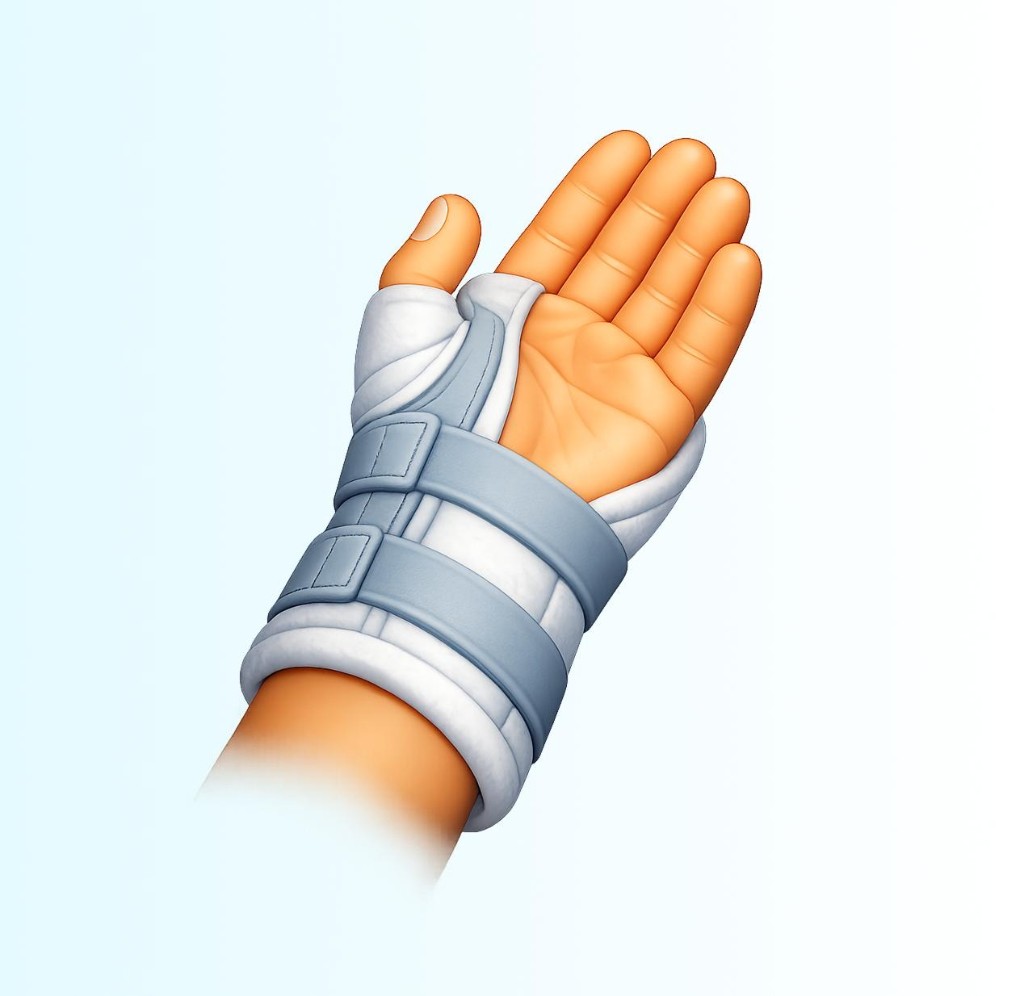
Do this exercise
2 sets × 8 reps. Watch the demo and tap through at your own pace — we log your reps, holds, and how it felt.
Prefer the classic step-by-step timer?
Open the hand, fingers relaxed.
Ready when you are
We'll guide you through 6 short steps — about 28 seconds of guided motion. Pause or stop anytime — nothing is uploaded.
Have ready: No special equipment
Contraindications & stop if…
When not to do this
- Recent thumb surgery without clearance
Stop if
- Sharp thumb pain
- Joint catching or locking
Prefer a quick pacing gate before the timer? Use full guided session — it asks for pain, stiffness, and fatigue in a few taps first (education only, not clearance).
Why it helps
Opposition is the foundation of pinch and grip. Practicing it preserves and rebuilds the dexterity you use for daily tasks.
What it should feel like
A light effort in the thumb. No sharp pain.
Target area
Thumb, fingers
Stop if you notice
- Sharp thumb pain
- Joint catching or locking
Get clearance first if
- Recent thumb surgery without clearance
Instructions, dose & tipsSetup, how many to do, and common mistakes
How to do it well
Goal, setup, dose, and the things therapists most often have to repeat. This is education — not a replacement for your clinician's plan.
Before you start
- Sit comfortably with your hand in front of you.
- Aim for accuracy, not speed.
- Stop if a joint catches or locks.
Today's dose
- Reps
- 8
- Sets
- 2
- Sessions / day
- 3
- Rest
- 20s
- Pain ceiling
- 2/10
Common mistakes
- Moving too fast and missing the fingertip
- Pressing the thumb hard against each finger
- Letting the wrist collapse during the touches
Easier version
- Touch only index and middle finger if other tips hurt
- Reduce to 4 reps per set
Harder version
Only if your phase allows progression.
- Touch each fingertip 2x in sequence (forward and back)
- Add a small pinch hold at each tip
How did this feel?
One tap. Saved as a question for your next visit when relevant — never auto-shared.